
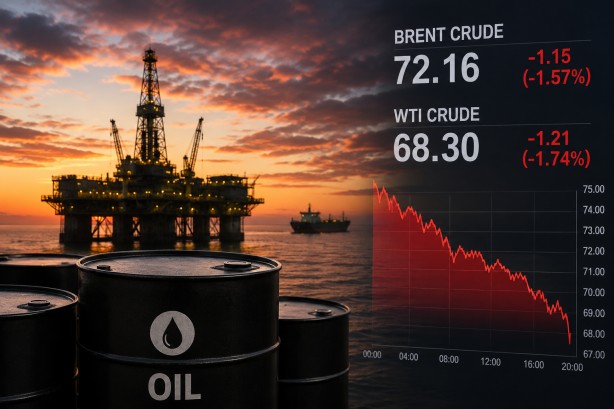
Oil prices saw a slight decline on Thursday as investors sought to take profits and evaluated the effects of rising tensions between the United States and Iran. Brent crude experienced a decrease of 0.52%, settling at $84.51 per barrel, while the US West Texas Intermediate crude dropped by 0.29% to $79.37 per barrel. Despite these reductions, both benchmarks remained near their highest levels in a month, following a recent streak of gains.
Investor sentiment has been heavily influenced by fears of potential supply disruptions amid a fresh series of US strikes on Iranian military sites, accompanied by Tehran’s threats to limit regional energy exports. The Strait of Hormuz, a pivotal route for global oil and liquefied natural gas trade, has become a focal point for traders, with reports indicating a decline in shipping traffic through this crucial channel after the latest tensions.
Geopolitical tensions have been a significant factor in supporting elevated oil prices, although market participants are watching closely to see if these conflicts will result in significant disruptions to energy supplies. Analysts suggest that should the situation escalate, oil prices could continue to rise, but a resolution to the crisis might drive prices down later in the year.
In addition to concerns surrounding the Strait of Hormuz, apprehensions have surfaced regarding the security of the Bab el-Mandeb Strait, another important energy transit route. There are fears that regional allies might become entangled in the conflict, further complicating the geopolitical landscape.
Analysts continue to caution that if these tensions worsen and lead to prolonged export disruptions, the oil market could face increased volatility. Conversely, a de-escalation could provide some relief to global energy markets, potentially leading to a decrease in prices as the year progresses.