
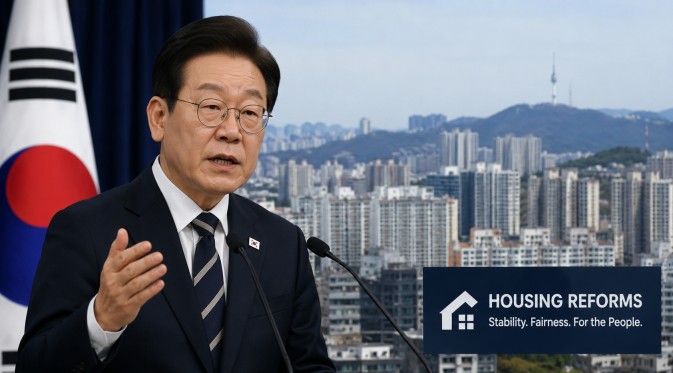
South Korean President Lee Jae Myung has announced his commitment to implementing significant housing reforms, despite the potential for political fallout. He emphasized the urgency of these measures to prevent a property bubble that could lead to prolonged economic stagnation, similar to what Japan experienced after its own housing market collapse.
During a policy forum, President Lee outlined several strategies the government is considering to stabilize the housing market. These include increasing property holding taxes, revising capital gains taxes, and imposing stricter rules on mortgage lending to curb property speculation. Lee highlighted the need for these reforms to ensure long-term economic stability, even if it means facing political challenges.
The proposed reforms aim to protect single-home owners, lower-income households, and residents living outside the capital region. In contrast, they would impose heavier tax burdens on owners of multiple properties and high-value speculative properties. Additionally, Lee suggested tighter controls on rental-deposit loans, while offering exemptions for young people, newlyweds, and other vulnerable groups to ease their housing burdens.
President Lee stressed the importance of being willing to accept political costs in order to prevent a larger economic crisis. He believes that these difficult but necessary changes are crucial for the country’s future stability. The South Korean government is expected to reveal a comprehensive real estate policy package later this month or in early August, which will further detail these housing reforms.